
A cable that heats up on a boat is often the result of a wrongly chosen size or a badly crimped lug. A thin cable seems to carry the current but drops the voltage, heats up and makes devices misbehave. The right size and a solid connection are the cheapest precaution in marine electrics.
Three values that set the size
- Current: The amps the load draws. The fuse and the cable are chosen by this value.
- Cable length: The total of the outgoing and return runs is counted, not only the outgoing one.
- Permitted voltage drop: About 3% for navigation lights and electronics and about 10% for other loads is accepted.
Practical calculation: Size (mm²) ≈ 2 × length (m) × current (A) × 0.0172 ÷ permitted voltage drop (V). For example, for a load drawing 10 amps, 6 metres away in a 12-volt system, the 3% limit is 0.36 volts. The calculation gives about 5.7 mm², so the next standard size, 6 mm², is chosen.
Why tinned and multistrand cable?
In a salty, humid environment bare copper tarnishes, its resistance rises and green corrosion creeps in from the strand ends. Tinned copper resists this far better. Flexible multistrand cable withstands vibration; solid household cable breaks over time on a boat.
Lug and crimping mistakes
- Connecting the cable with a lug that does not match its size.
- Crushing the lug with pliers or a hammer. A hexagonal or indent crimping tool should be used.
- Making the connection with solder only. A soldered joint breaks under vibration.
- Leaving the connection exposed without heat-shrink sleeving with adhesive lining.
- Letting bare wire protrude beyond the lug or crimping the insulation inside the lug.
The fuse protects the cable
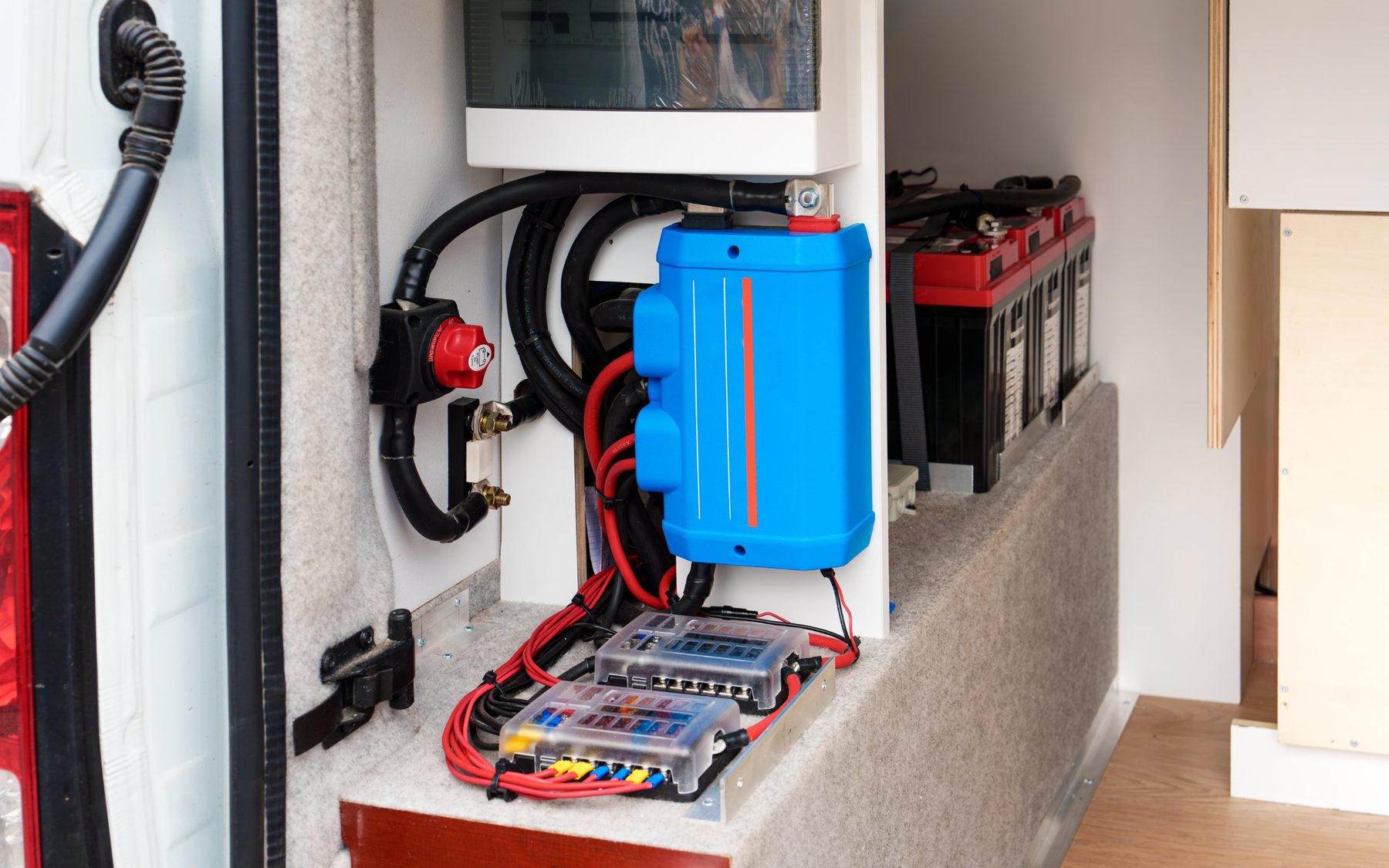
The fuse is chosen by the current the cable can carry and is placed as close as possible to the source, that is the battery or the bus bar. Thickening the cable and enlarging the fuse increases the risk instead of protecting the cable.
If a cable or lug is hot to the touch, its insulation has melted or the lug has blackened, switch that circuit off at the main switch and tell a technical service. These signs are the first warning of a fire risk.
Frequently asked questions
What cable size does a 10-amp load need in a 12-volt system?
If the load is 6 metres away and you aim for a 3% voltage drop, about 6 mm² is needed. The size grows with longer distance or higher current; the exact value should be calculated.
Can I solder the cable ends and connect them?
No, solder alone is not recommended. Vibration breaks the soldered joint. Use a suitable lug, the right crimping tool and, where needed, adhesive-lined heat-shrink sleeving.
Can I have my cables and panel checked in Adana, Mersin or Bodrum?
Yes. Panel, cable size and connection checks are done where the boat is. Besides Adana, Mersin and Hatay, we plan by appointment for Bodrum, Alanya, Antalya and Istanbul too.